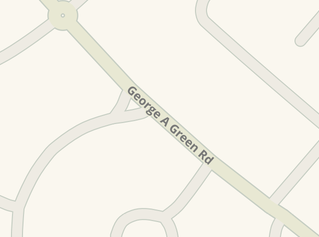
Here’s the road in question:
George-a-Greene (…) was a legendary figure of English folklore, a hero of low rank who single-handedly snuffed a rebellion which supposedly took place in the time of Richard I.
from an introduction to the play “George-a-Greene, the Pinner of Wakefield” (archived)
I wasn’t always the way I am now. I used to be a prescriptivist, one of those people who says words should mean what they mean and should never change. Of course, learning about my own identity means I’ve learned other things too, including that language is fluid.
Normally, this happens over a period of centuries. But there’s a road in Wakefield that demonstrates this over a much shorter timescale, named after George-a-Greene. It was named George-a-Green Road.
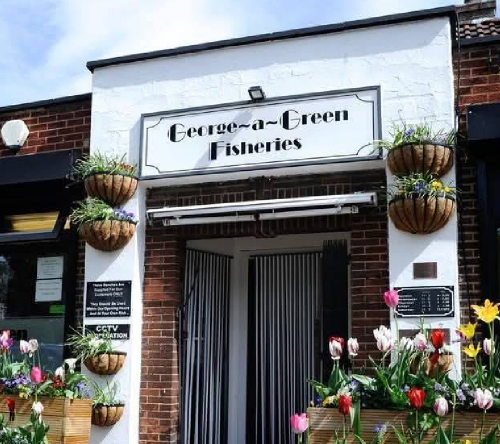
On this road, there’s a chippy. It’s called George-a-Green Fisheries. It’s not a very good one, but it looks like this:
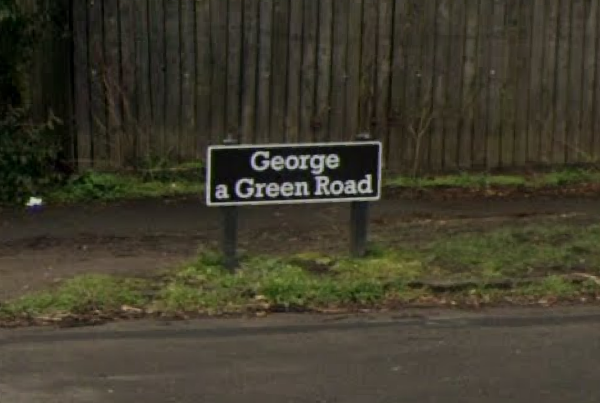
At one point in the late 1990s, Wakefield went on a kick of removing punctuation from their street names. Any apostrophe-s on the end of a street name lost its apostrophe. Any hyphens likewise vanished, which left the mushy mess that is “George a Green Road”:
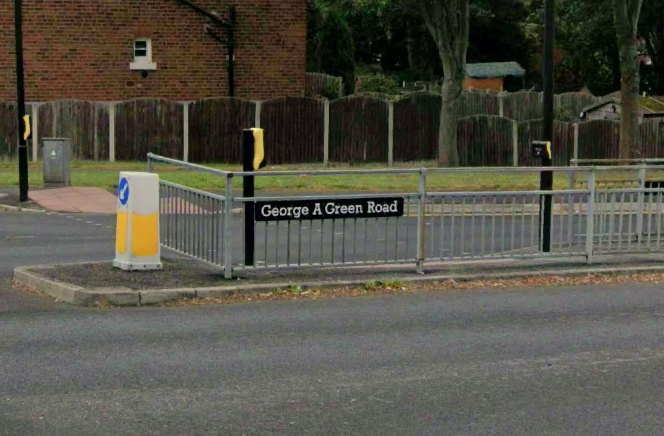
But at the other end of the road, there’s a more recent road sign, installed in 2008. Presumably, whoever saw the road name thought the lowercase ‘a’ was an error, and had the lowercase ‘a’ capitalised. So it’s now George A Green Road:
The George A. Green in question does not exist and has never existed, but he does have a road named after him in case he ever does. A road name waiting for a hero, so why not name your next son George A. Green? :)